
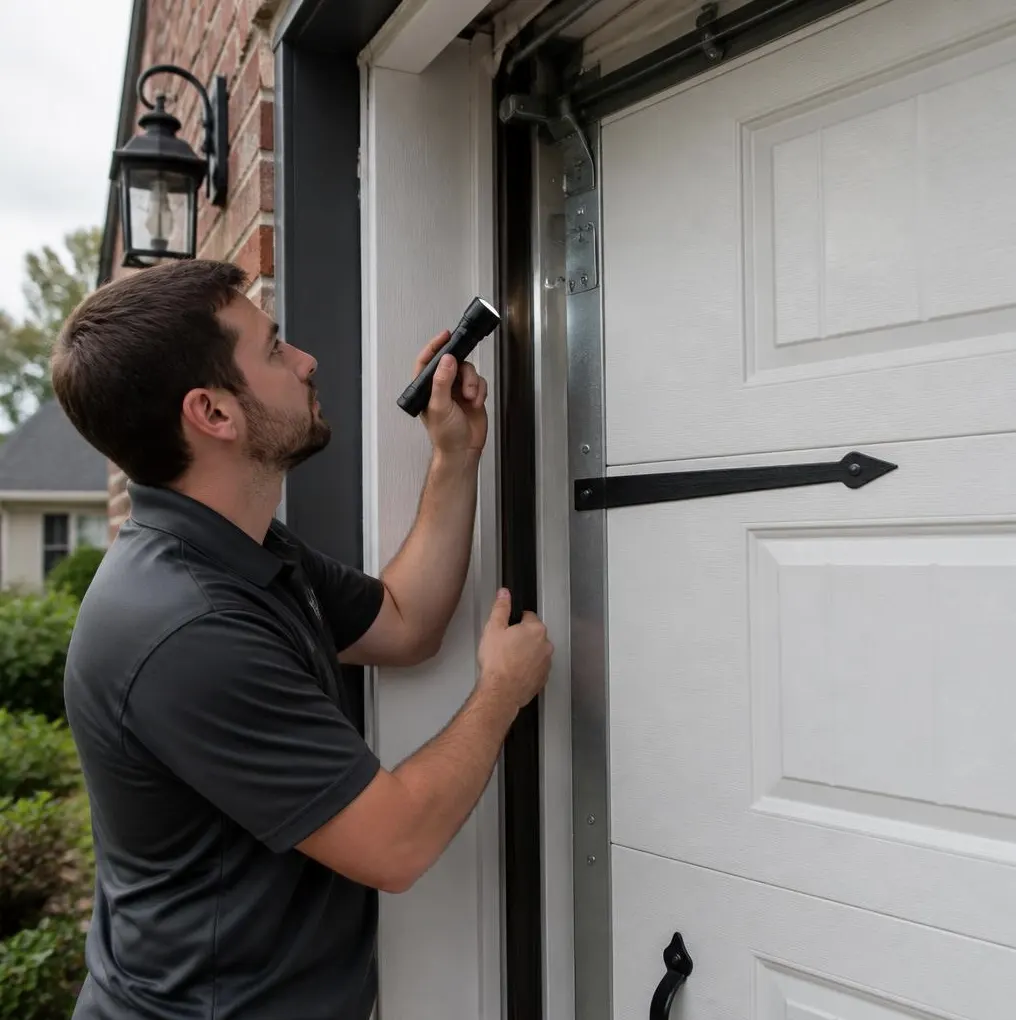
When a technician gets a call this time of year, it usually starts the same way: the homeowner noticed the door slamming shut harder than usual, or it's moving noticeably slower than it did back in August, or there was a loud bang from the garage followed by a door that won't budge at all. Nine times out of ten, it's the same story playing out across Oldham County garages as the temperature drops — metal contracts, lubricant thickens, and parts that were already a little worn finally give out. The good news is that most of this is preventable if you get ahead of it now, before the first hard freeze.
Why Cold Hits Garage Doors Harder Here
This part of Kentucky doesn't ease into winter gently. Humid summers give way to real cold snaps, often with ice, and the swing between the two seasons is hard on a garage door system. Steel springs and cables lose a bit of tension and flexibility as temperatures fall. Lubricant that worked fine in July gets stiff and gummy in January, adding friction exactly where you don't want it — on rollers, hinges, and the torsion spring itself. A door that's been running on borrowed time all summer often doesn't announce itself until that first cold week, when everything tightens up at once.
What This Looks Like in Practice
- Slow or jerky movement as the opener strains against stiff, under-lubricated hardware.
- A door that reverses unexpectedly because cold has thrown off the force sensitivity settings on the opener.
- Loud bangs or pops from the spring area — a warning sign, not something to ignore.
- A door that's frozen to the floor after an ice storm, especially if the weatherstripping has gaps.
Check the Weatherstripping Before the Gaps Get Worse
Rubber seals take a beating from humid summers and UV exposure, and by fall they're often cracked, brittle, or pulling away from the door. Once winter hits, those same gaps let in cold air, moisture, and occasionally snow or ice that can refreeze along the bottom edge. Run your hand along the bottom seal and the side stops — if it's stiff, torn, or doesn't spring back after you press it, it's time to replace it. This is inexpensive, takes under an hour, and makes a real difference in keeping the garage (and anything stored in it) from freezing.
Springs and Cables Take the Brunt of Winter Stress
Torsion and extension springs are under constant tension, and cold steel is more brittle than warm steel. A spring that's been slowly wearing out all year — most are rated for a set number of cycles, roughly 10,000, regardless of season — is far more likely to snap during a cold snap than in July. If your door has started making a grinding or scraping noise, or one side seems to lift unevenly, don't wait for the spring to fail completely. A broken spring under tension can be dangerous, and a door with a failed spring usually won't open at all, which is a bad discovery on a freezing morning when you need to leave for work.
Sensors and Openers Don't Love the Cold Either
Photo-eye sensors near the bottom of the track tracks can fog up or collect condensation during big temperature swings, causing the door to refuse to close or reverse for no obvious reason. Battery backup systems also drain faster in cold weather, so if you rely on one during power outages — common during winter ice storms — it's worth testing it now rather than finding out it's dead when you actually need it. Wipe sensor lenses clean, make sure they're aligned, and check that the backup battery still holds a charge.
Salt and Ice Are Rough on Tracks and Hardware
Rock salt tracked in on tires or boots is corrosive, and over a winter it can eat into exposed metal on tracks, rollers, and hinges. Combined with ice buildup inside the track, this is a common cause of a door that binds, jumps, or comes off-track partway through the season. A quick wipe-down of the tracks every few weeks, along with keeping the garage floor as dry as practical, goes a long way toward preventing this kind of wear.
A Simple Fall Checklist
- Lubricate rollers, hinges, and the torsion spring with a garage-door-specific lubricant (not WD-40, which washes grease out rather than replacing it).
- Tighten any loose bolts on the track brackets and hinges — seasonal expansion and contraction loosens hardware over time.
- Test the auto-reverse safety feature by placing a block of wood in the door's path.
- Check door balance by disconnecting the opener and lifting the door halfway by hand — it should stay put, not fall or shoot up.
- Clean and align the photo-eye sensors.
When to Call La Grange Garage Door
If you're hearing grinding or banging from the spring area, if the door is noticeably slower or heavier to lift by hand, or if the weatherstripping is too far gone to patch, that's the point to call in a professional rather than keep testing it yourself through the winter. Our Preventive Maintenance service covers the full lubrication, hardware, and safety-sensor check before cold weather settles in, and if a spring is already showing wear, our Spring Replacement service gets it swapped out safely before it fails on its own terms — usually at the worst possible moment.
If your garage door is already giving you trouble heading into the cold months, give La Grange Garage Door a call. We serve La Grange, Buckner, Crestwood, Pewee Valley, Goshen, Prospect, Smithfield, and Shelbyville, and we'd rather help you catch a small problem now than deal with a stuck door during the first ice storm of the season.